How it works
Git registries feed the web app, which delivers to every machine. Telemetry stays in a backend you host.
The path to trusted autonomy
Autonomy is earned one step at a time. Each pillar adds one.
Everyone runs the same, current capabilities.
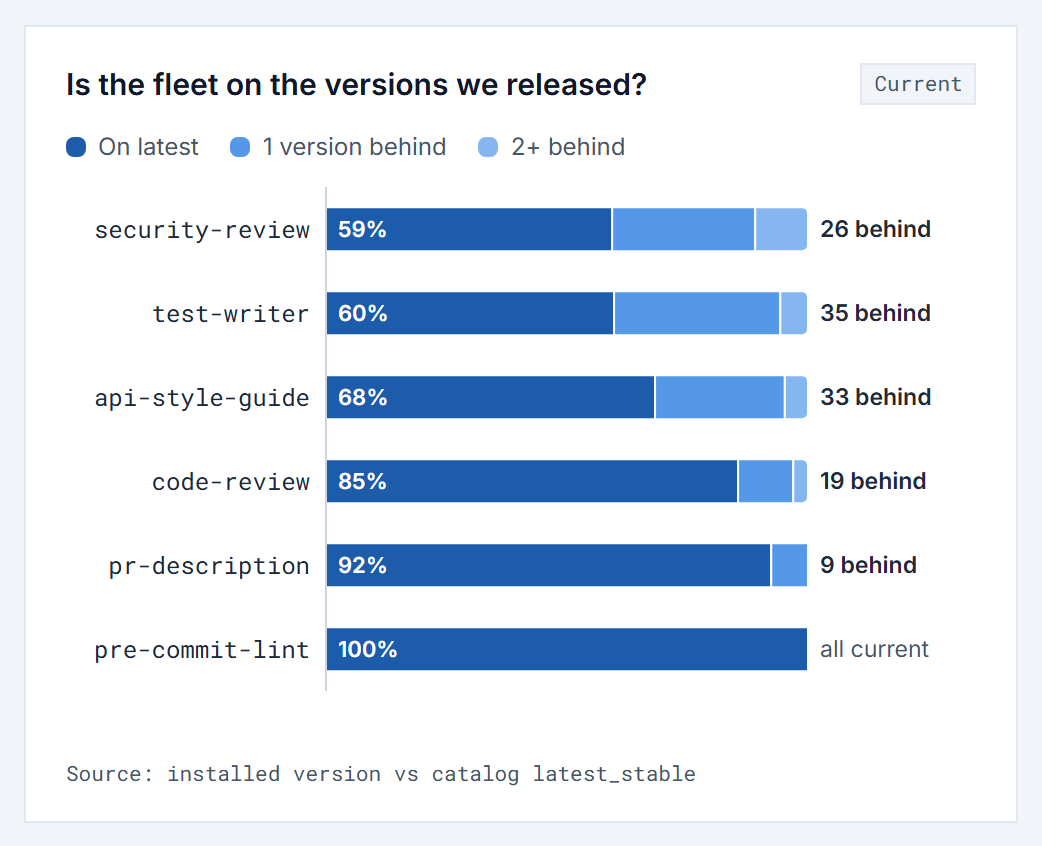
Skills, agents, hooks and instruction files from your Git registries, installed and kept current on every machine, for Claude Code today, never silently overwritten.
You can see what runs and what it costs.
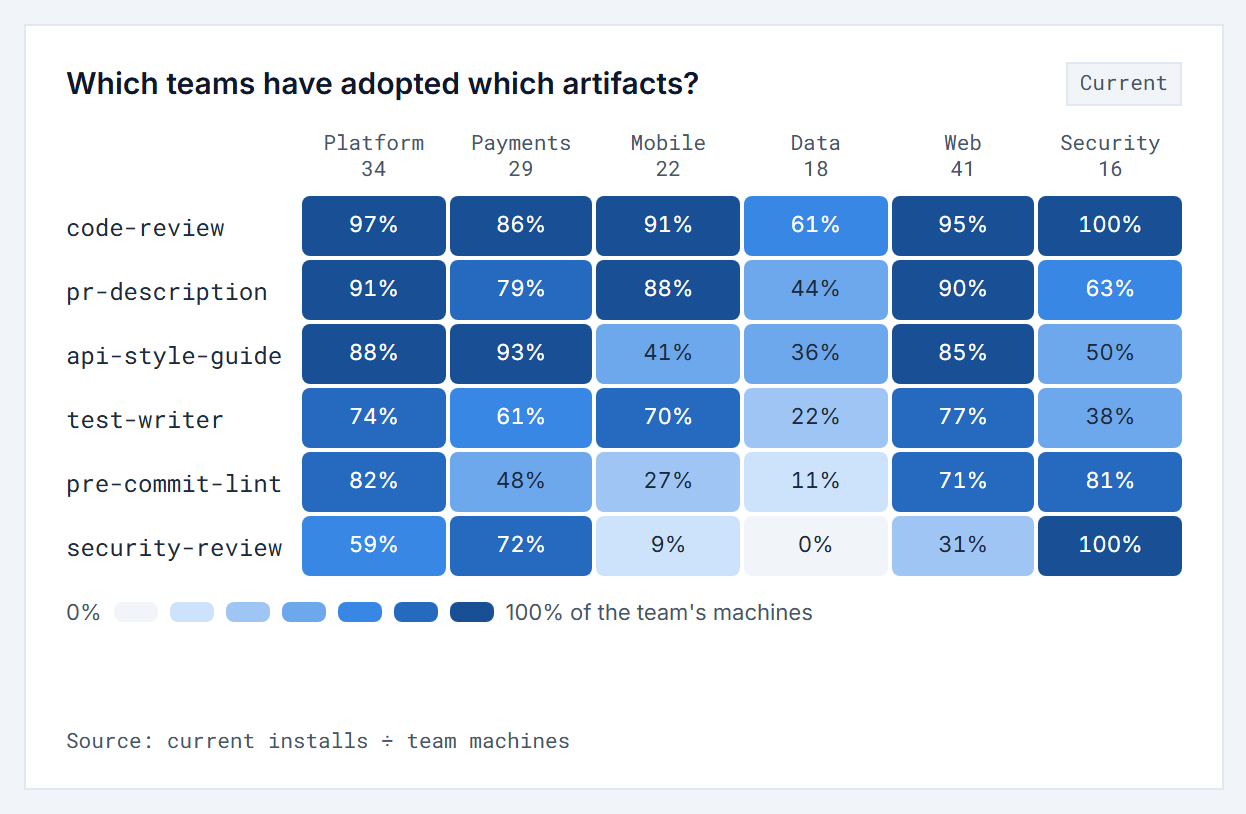
Adoption, versions in use, unmanaged artifacts and token cost, with the source and coverage % on every cost figure.
Capabilities get better from evidence.
Per-artifact health from telemetry, with explainable, rules-based improvement suggestions for curators and admins.
What runs was approved.
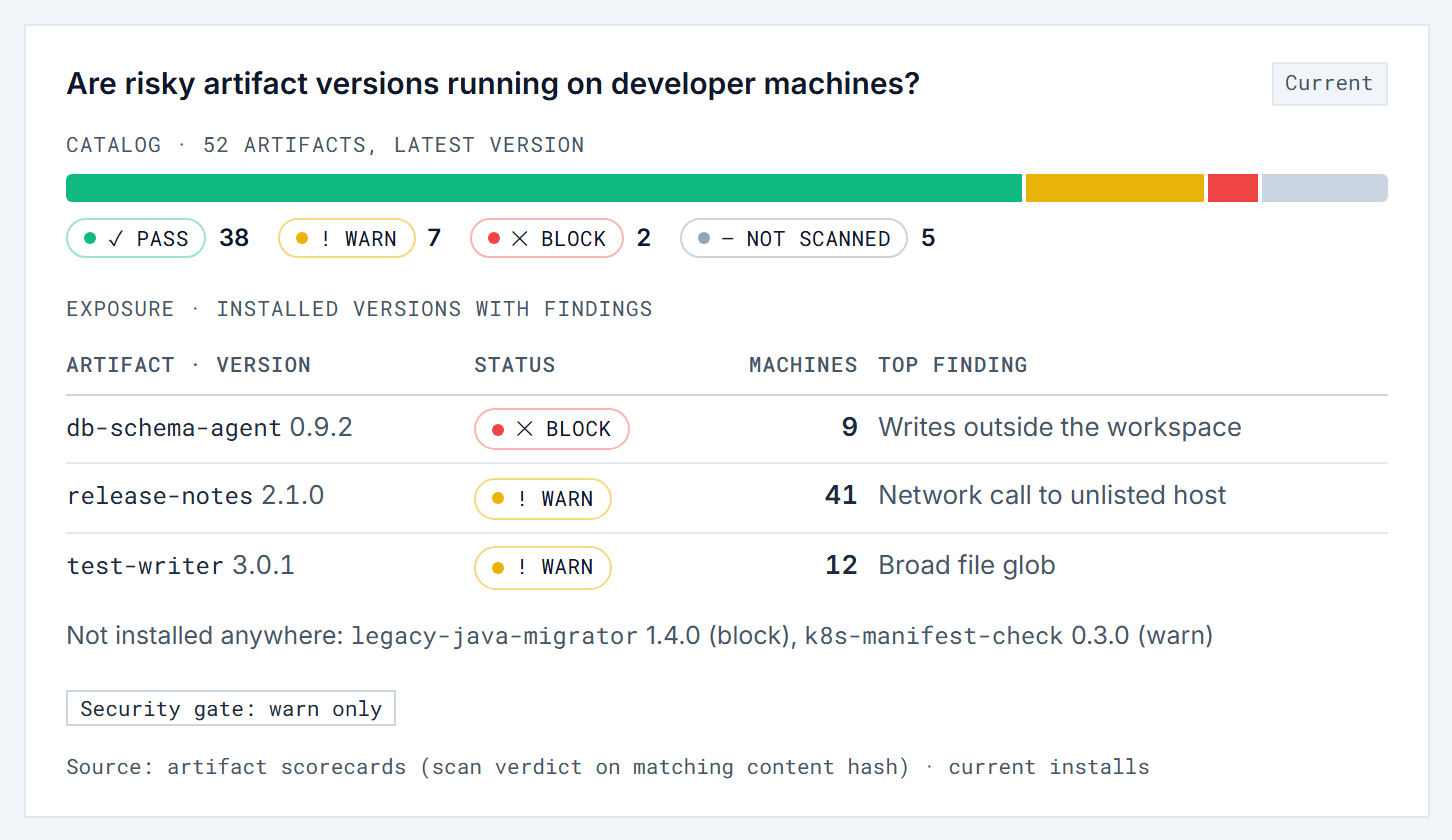
Every skill security-scanned when indexed, with an optional gate that withholds failing skills. Approval workflows and signed artifacts are on the roadmap.
Every change is attributable.
For changes whose session can be linked, which model, skill version and agent version produced it, with a dated history of every published and withdrawn version.

See the AI tools nobody approved
Forge scans each machine for skills and agents that no registry delivered, and shows them by team.
Read about security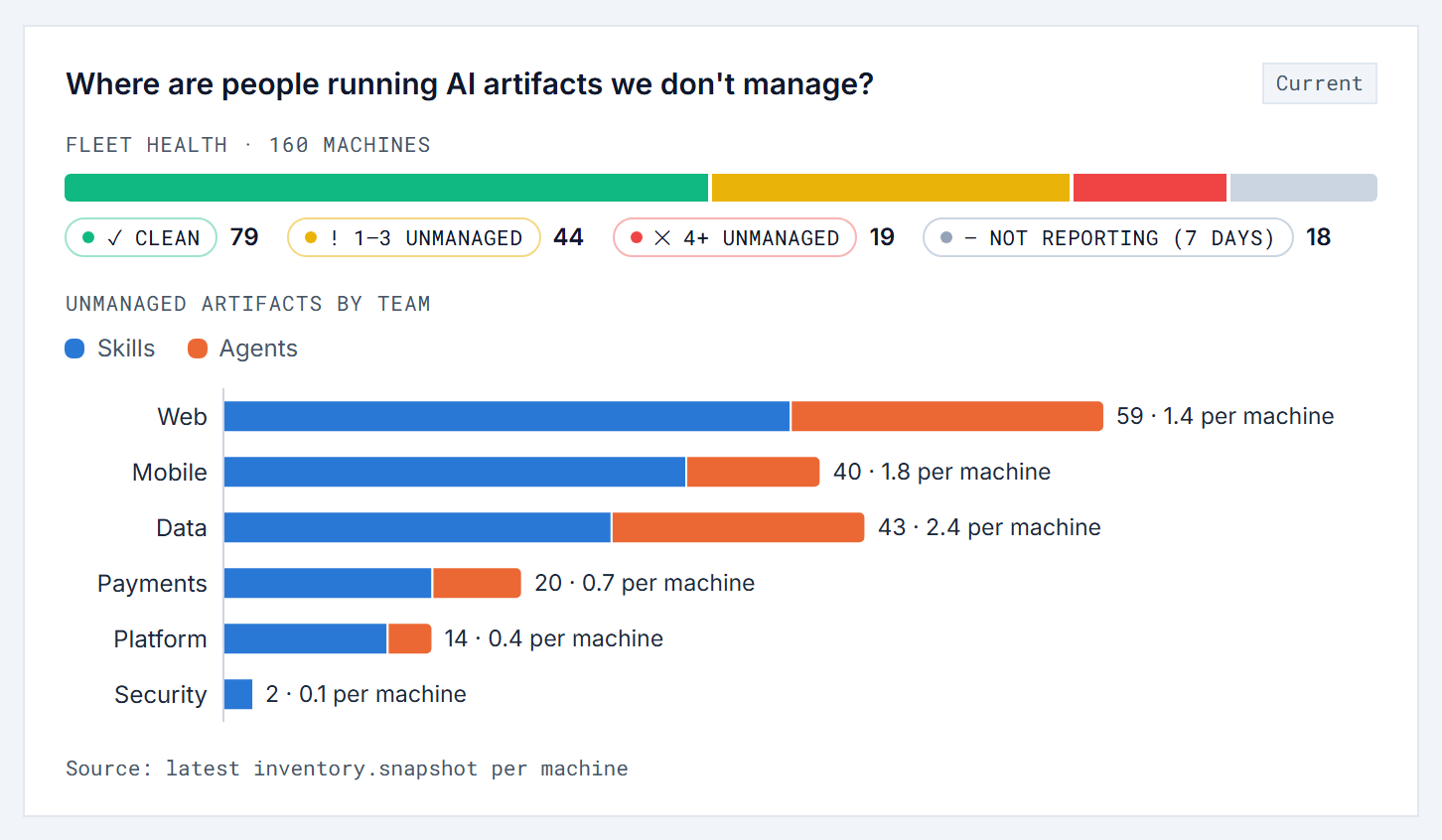
Who it's for
Knows what's running, which versions, on which machines, and at what cost.
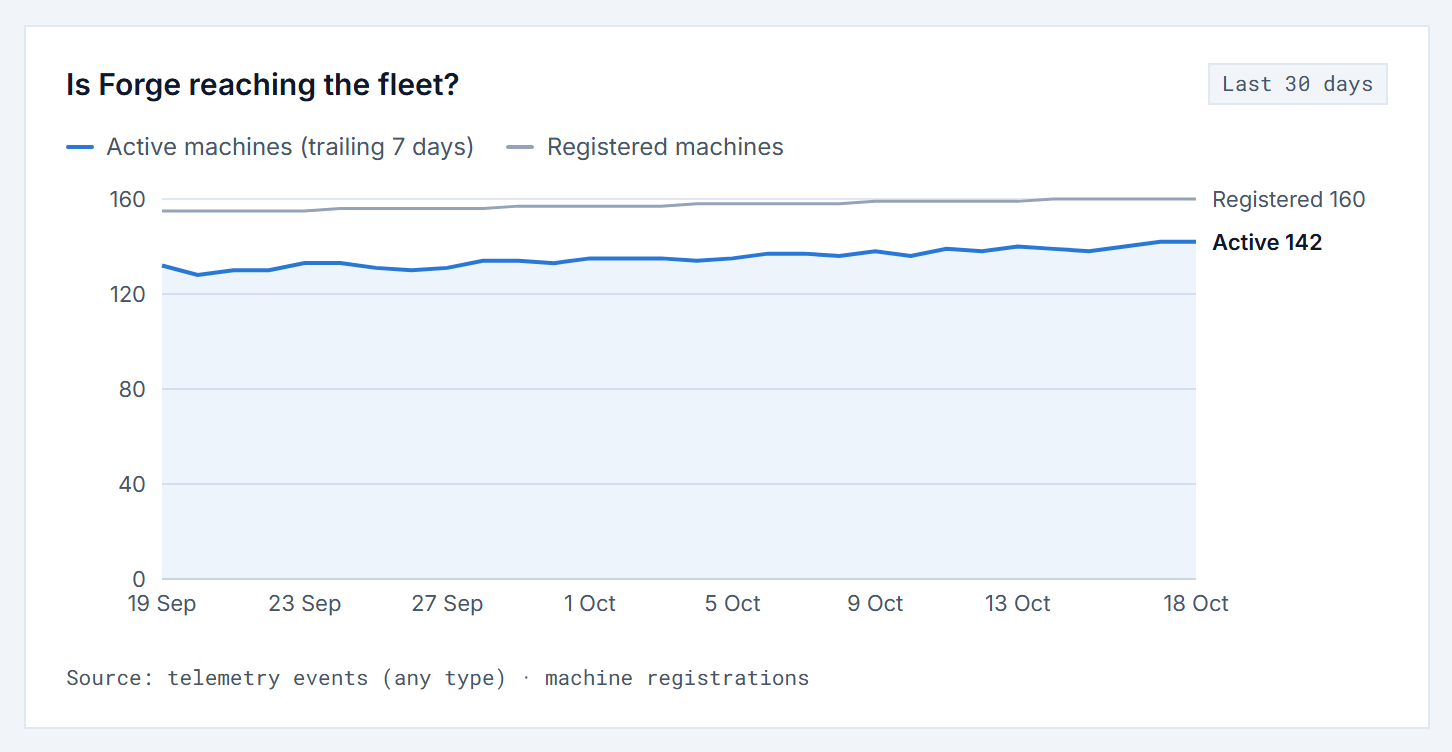
One place to publish, deliver and update capabilities, self-hosted on infrastructure you already run.
Inventory, versions in use, security scan results and unmanaged artifacts. Approval records and change attribution are on the roadmap.
The team's skills and agents installed and current, without being ranked individually.
Can your organization say which model, skill and agent produced its last change?
Join early access